Past Speakers
Recent Speakers, Interesting Programs
The Sedona Gem and Mineral Club has a roster of knowledgeable, professional speakers. Monthly meetings usually include a presentation on an array of subjects including geology, minerals and mineral collecting, and much more. Another reason to be a member!
Members and Guests are invited to submit speaker proposals which are compensated. Speakers are required to use visual aides and PowerPoint is recommended. Set-up assistance is provided. Currently presentations are presented in person and via Zoom from our meetings, and we will assist in the broadcast.
Coming and Past Speakers
Brian Beck, “The Copper Queen, Binghamton Mine”, May 2023
Brian’s presentation was on the Copper Queen- Binghamton Mine in Mayer, Arizona. The presentation covers the re-exploration of historic mines and what mineralization was encountered, illustrated by photographs of the many varied specimens found at the mines.
Brian is originally from California where he attended California State College in San Diego and Long Beach. He holds Master Degrees in both Geology and Geophysics. He has worked in both the mining and environmental industries in California, Oregon, Arizona, New Mexico and Nevada. Brian has been in Arizona for more than 30 years and an Arizona Registered Geologist since 1987. At the present time he is working on several gold and lithium exploration and mining projects in Arizona.
Stanley Celestian, “Hidden Treasures of the Natural History Museum of Los Angeles,” March 2023
Dr. Stephen Reynolds , “Correlation of the Red Rocks with those of Grand Canyon and the Eastern Mogollon Rim: An Unresolved Dilemma”, November, 2022
For decades, there have been uncertainties about how the red rocks of Sedona correlate to those of Grand Canyon and to similar rocks eastward across the Mogollon Rim. Key geologists expressed hesitancy about how the rocks of Sedona matched those of Grand Canyon, even though they had worked extensively on these rocks in both places. The red rocks of Pennsylvanian and Permian age in Grand Canyon were originally all called Supai Formation, but later the upper part of this sequence was separated out as a separate formation, the Hermit Shale. Learn more about the history, study and controversy the classification of our geology as well as the new evidence on proper classification that has come to light. Dr. Reynolds is currently working with a team of geologists and paleontologists to assess how the red rocks correlate from Sedona eastward along the Mogollon Rim. Our preliminary results agree with other researchers who recommend we use Supai Group for the red rocks of the Sedona cliffs, rather than Hermit and Schnebly Hill formation.
Stephen J. Reynolds received an undergraduate geology degree from the University of Texas at El Paso, and M.S. and Ph.D. degrees in structure Tectonics and regional geology from the University of Arizona. He then spent 10 years directing the geologic framework and mapping program of the Arizona Geological Survey, where he completed the 1988 ‘Geologic Map of Arizona’. Steve is a President’s Professor in the School of Earth and Space at Arizona State University. He is currently working, with coauthor Julia Johnson, on a completely new version of the Roadside Geology of Arizona, due out sometime in 2023. At the University of Arizona, he recently was designated as a President’s Professor, ASU’s highest honor recognizing inspired, innovating teaching and scholarship of learning. We are truly looking forward to his presentation.
Kennard Bork, “Co-Evolution of Minerals and Life”, May 2022
This is a discussion featuring Dr. Robert Hazen’s ideas about the linkage of geochemistry and life. Our planet undergoes incessant, remarkable, and on-going change. The changes began once our planet had formed. Rocks and minerals are catalysts for life. Star explosions sent out streams of elements seeding the planets—then minerals evolved.
By the time he was in high school, Ken’s interest in science was strong but he also wanted to know more about Earth History. He followed a career in biology at the suggestion of one of his teachers. It dawned on him that paleontology incorporated biology and history of the planet in one super-interesting field. He was a geology major in college and then pursued a Ph.D. in paleontology, with the goal of teaching at the university level. His research also included the history of geology.
After retiring in 2013 he and his wife (Katherine Camille Odell) moved to Sedona where he continues his passion of geology and paleontology. Ken was a geology major earning a B.A. degree at DePauw University, Greencastle, Indiana; an M.A. degree in geology/paleontology from Indiana University, Bloomington, Indiana; and a Ph.D. in geology/paleontology from Indiana University. His offices and awards and publications are to numerous to list.
Sue Celestian, “The Volcanoes of Arizona Part I,” April 2022
Bill’s presentation will be a one-of-a-kind in-person presentation. Bill will tell the story of several trips to Colorado during the years 1969 to 1982. Bill and another young rockhound spent several days each trip acclimatizing prior to ascending Mt. Antero in Chaffee County in Colorado. They collected Aquamarine, Beryl, Quartz, Albite, and other minerals. The deposits ranged from 11,000 to 14,000 feet. Mount Antero is the 10th highest peak in Colorado. He will bring many specimens to pass around for members to examine.
Bill, at age five and six, began collecting “pretty rocks”, and it morphed into a lifetime passion. As a teenager Bill went on collecting trips to Nebraska, eastern Wyoming, and South Dakota where he collected Tepee Canyon fortification Agate.
In 1973, Bill received his bachelor’s degree in Geology from the University of Nebraska. He worked as a geologist in the oil and gas industry for 37 years retiring in 2015. Since that time, he joined both the Sedona Gem and Mineral Club and the Mingus Club in Cottonwood. He is serving a second one-year term as president of the Mingus Club.
The club meeting will feature member displays, closing with the monthly raffle of great newly acquired rock and mineral specimens.
Bill Hedglin, “The Minerals of Colorado,” March 2022
Les Presmyk, “The Silver Queen and Silver King Mines,” February 2022
The discovery of the Silver Queen and Silver King mines began as the military entered this part of Arizona to protect settlers and prospectors. As the Stoneman Grade was being built over the mountains to provide access from the west into the Globe area, one of the soldiers happened upon some strange black and heavy rocks. He showed them to a rancher in Florence without the source. Over the next few years this rancher and several friends made prospecting trips to these mountains, discovering the Silver Queen and then Silver King.
Over the next 20 years both mines were developed with the Silver King becoming a major producer. The Silver Queen ran out of silver ore after a few hundred feet of shaft when the miners encountered high-grade but worthless copper mineralization. The Silver King operated until silver was demonetized in 1893. The Silver Queen lay dormant until 1909 or so when Boyce Thompson became interested in it for its copper potential. The property was renamed the Magma Mine and it became a major copper producer over the next 90 years or so. While the mine has been closed for over 25 years, the future is bright for the Magma mine. Resolution Copper is currently developing a deep orebody of over one billion tons of copper ore.
Les Presmyk recently retired as Principal Mining Engineer for Salt River Project, Arizona’s second largest electric utility. He and his wife of 45 years, Paula, are Arizona natives and both are graduates of the University of Arizona. Les has been actively involved in his community of Gilbert, Arizona for over 25 years. He is immediate Past president of the Tucson Gem and Mineral Society and former President of Mineral Society of Arizona. We are looking forward to his presentation.
Ken Zoll, “Star Wounds: Meteorites from Ancient Native American Sites”, January 2022
The occurrence of meteorites on archaeology sites in North America has been known since the early 19th century. From the Hopewell culture in the eastern United States to the Indians in the American Southwest and northern Mexico, meteorites have been found on these ancient sites. Much like meteorite hunters of today, ancient Native American cultures actively engaged in meteorite collecting. Several meteorite fragments from Meteor Crater near Flagstaff have been discovered at ancient dwellings in Central Arizona. This talk will describe these meteorite locations, how they were associated with Meteor Crater and how one of the meteorites, using radiocarbon dating, established its location within a ruin and confirmed the date of the ruin’s destruction.
Ken Zoll is the Executive Director of the Verde Valley Archaeology Center in Camp Verde and the Regional Coordinator of the site steward program of Arizona State Parks and Trails, charged with the monitoring of several prehistoric sites in the Verde Valley. His archaeology specialty is ancient astronomy practices. He has conducted many studies within the Coconino National Forest and for the City of Springerville, Arizona and is the author of several books and articles on his discoveries. He is a certified instructor in ancient astronomical practices with the Arizona Archaeological Society. Ken, and his wife Nancy have lived in the Village of Oak Creek since retiring from Chicago in 2004.
Les Presmyk, “Arizona: 150 Years of Mining, 130 Years of Collecting, 110 Years of Statehood,” October, 2021 –
George & Sharon Lane, “Spider Web Stromatolites,” October, 2021 –
Bulgarian Rock Collecting
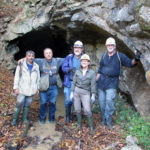
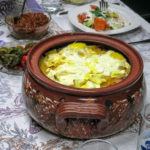
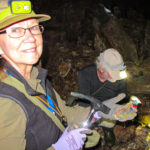
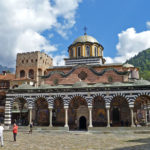
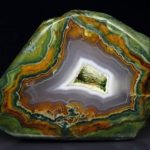
Pat Tucci and Zelda Baley, “Rockhounding in Bulgaria,” May, 2021 –
In 2016, Zelda and Pat travelled to Bulgaria in Eastern Europe. Bulgaria is a Balkan nation with diverse terrain encompassing Black Sea coastline and a mountainous interior. Bulgaria holds a leading position in European mining, ranking third in copper, fourth in gold, fifth in lignite mining. The main raw materials produced in Bulgaria are lignite, lead-zinc, copper and polymetallic ores, gypsum, limestone, bentonite, kaolin, quartz sands, refractory clays, marble. Bulgarian mines also produce a variety of collectable mineral specimens. Typical minerals include sphalerite, galena, quartz, and calcite. Other rarer specimens include Orpheus agate, non-precious opal and petrified wood. Zelda Bailey and Pat Tucci are both retired geologists and long-time mineral and fossil collectors. They started their mineral business, GEOdyssey LLC, in 1996 in the Denver, Colorado area where they lived prior to moving to Sedona in 2017. They have travelled extensively collecting and buying minerals and fossils, including international trips to Namibia, Morocco, and Bulgaria.
Bulgarian Rock Collecting
Mark Moorehead, “Fabulous Fakes, Enhanced Rock Specimens & How to Detect Them” April 2021 –
Don’t get ripped off! This presentation provided an overview of some Common Rock Show, Etsy and Ebay specimens that are not what they claim or appear to be. Specimens include fossils, Opals, Turquoise jewelry, Citrine, Tourmaline, Malachite and Meteorites. Mark also shared simple tools for detection and some reliable website sources for more information on specimens that are total hoaxes, mechanically altered, irradiated, heated, dyed, coated, fused with vaporized elements or just simply plastic. Join us in April.
Carrie Cannon, “For the Love of Turquoise” March 2021 –
Turquoise has a long-standing tradition amongst Native cultures of the Southwest, holding special significance and profound meanings to specific individual tribes. Found on six continents across the world, turquoise forms in arid regions through the process of water seeping through rock and interacting with copper, aluminum and iron deposits. This talk explores a long tradition of distinctive cultural styles, history and transition of this wonderous stone. Carrie Calisay Cannon is a member of the Kowa Tribe of Oklahoma and is also of Oglala Sioux and German ancestry. She has a B.S. in Wildlife Biology and an M.S. in Resource Management. She has been living and working on the Hualapai Indian Reservation for the last 15 years where she is employed as an Ethnobotanist at the Cultural Centers. By weekend she is a lapidary and silversmith artist who enjoys chasing the beauty as she creates jewelry.
Stanley Celestian, M.S., “Rock Candy”, February 16, 2021
Stanley Celestian gave an amazing presentation complete with jaw dropping photos of specimens representing the various types of rocks, many found in Arizona. One of the club’s favorite repeat speakers, Stan has been teaching geology courses at ASU since 2005, including physical geography and natural disasters. He has also taught geology, physical science, and astronomy at Glendale Community College, Embry-Riddle Aeronautical University, and Wayland Baptist University. Stan conducted workshops in Rocks and Minerals for the Arizona Department of Mines and Mineral Resources, and was the NASA Ambassador to Jupiter and the Solar System for Arizona. He received a Master of Science in Geology (Paleontology) from Northern Arizona University
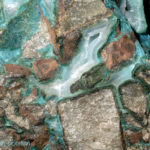
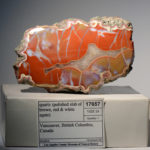
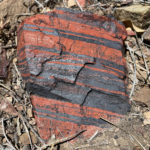
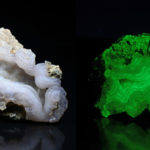
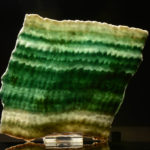
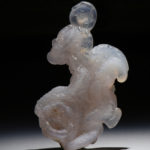
Elley Ringo, “Why Arizona Geology Feeds our Fascination for Minerals, January 18, 2021 –
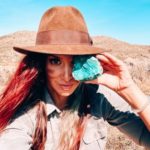
Elley has a degree in Economic Geology from the University of Nevada, Reno. She has eight years mining geology experience in Arizona. Elley has been an avid rockhound since she was a young girl. She has traveled all over the United States to collecting rocks and minerals and exploring abandoned mines. Elley is an expert in the field of mineral identification, and has a huge passion for it. She is one of the most enthusiastic geologist in her field. She loves teaching her fellow rockhounds everything she can about the geologic world around them. She maintains a website called ‘ElleyKnowsRocks.com’ and promotes rockhounding through Youtube, Twitter, Instagram and Facebook.
Pat Tucci and Zelda Bailey (members), “Namibian Mineral Safaris,”October 2020 –
Ted Grussing, “Opals,” March 2020 –
Peter J. Pilles, Jr., “The Earth: Minerals and Pigments from Elden Pueblo and Honanki,” February 2020 –
Drake Meinke, “Copper and Clarkdale…and What Happened to it All,” January 2020
Dr. Larry Jensen, “The Origins of and the Identification of Jaspers,” November 2019 –
Helen Serras-Herman, “Passion for Opals,” October 2019 –
Sue Celestian, “Geology of Western Australia,” May 2019 –
Pat McMahan (member), “Agates of Arizona,” April 2019 –
Wayne Ranney, “Amazing Antarctica and its Geologic Relation to Arizona,” February 2019 –
Dr. Kennard Bork, “Noteworthy Geosites of Northern Arizona”, January 2019 –